Assimilasjon Explained: Meaning, Process, and Impact on Society
Assimilasjon is a concept that describes how individuals or groups gradually adopt the culture, language, and social patterns of another group. In today’s interconnected world, assimilasjon is more relevant than ever, as migration, globalization, and cultural exchange continue to shape societies across the globe. To understand how communities evolve, it is essential to explore how assimilasjon works and why it matters.
Understanding the Concept of Assimilasjon
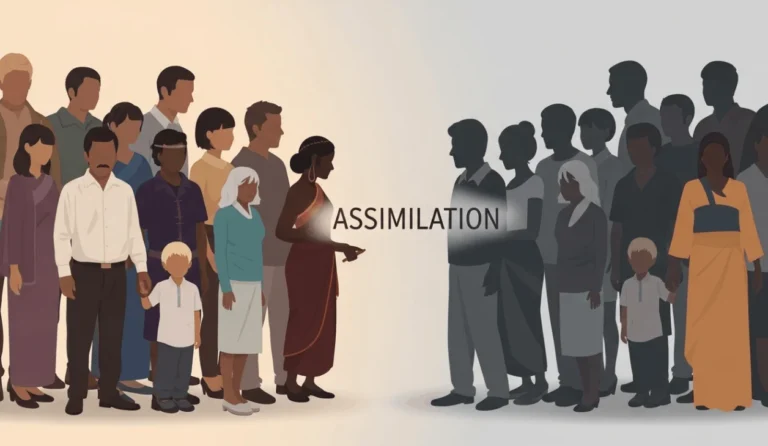
At its core, assimilasjon refers to the process where a minority group or newcomer integrates into a dominant culture, often adopting its values, traditions, and behaviors. While this process can happen naturally over time, it may also be influenced by social, political, or economic pressures.
Within the field of Sociology, Acculturation is studied as a key mechanism of social integration. Sociologists examine how individuals adapt to new environments and how identity changes during this process. Importantly, Acculturation does not always mean complete loss of original identity; instead, it often involves varying degrees of cultural blending.
Historical Background of Assimilasjon
Historically, Acculturation has played a major role in shaping nations and empires. When different cultures came into contact through trade, migration, or conquest, assimilation often followed. In some cases, it was voluntary, as people adopted new customs to improve social or economic opportunities. In other situations, Acculturation was forced, with minority groups required to abandon their traditions.
As societies became more structured, governments began using assimilation policies to create national unity. However, these policies often sparked debates about cultural identity and human rights, many of which continue today.
Types of Assimilasjon
There are different forms of Acculturation , each with unique characteristics. Cultural Acculturation occurs when a group adopts the customs and lifestyle of another society. This may include clothing, food habits, and social norms. On the other hand, structural Acculturation happens when minority groups gain access to institutions such as education, employment, and political systems.
Additionally, linguistic assimilasjon is one of the most visible forms. It involves learning and using the dominant language of a society. Over time, this can lead to reduced use of the native language, especially among younger generations.
Cultural Assimilation in Everyday Life
In everyday life, Acculturation can be seen in how immigrant communities adjust to new environments. For example, families moving to a new country often adopt local traditions to fit in socially and economically. Schools, workplaces, and media all play a role in shaping this process.
However, cultural assimilasjon is not always one-sided. In many modern societies, cultural exchange goes both ways. As a result, dominant cultures also absorb elements from minority groups, creating a more diverse and dynamic social landscape.
Linguistic Changes and Assimilasjon
Language is one of the strongest indicators of Acculturation . When individuals move to a new country, they often learn the dominant language to communicate effectively. Over time, this can lead to bilingualism or even language shift, where the original language is used less frequently.
Nevertheless, linguistic assimilasjon can also create challenges. While it helps with integration, it may also contribute to the loss of cultural heritage if minority languages are not preserved. Therefore, many communities actively work to maintain their native languages while adapting to new linguistic environments.
Factors That Influence Assimilasjon
Several factors affect how quickly and effectively Acculturation occurs. Education plays a significant role, as it helps individuals understand and participate in the dominant culture. Similarly, age can influence the process, with younger people often adapting more quickly than adults.
Economic conditions also matter. Individuals seeking better job opportunities may experience faster assimilasjon due to workplace interactions. Furthermore, social acceptance and government policies can either encourage or slow down the process.
Benefits and Challenges of Assimilasjon
There are both advantages and disadvantages associated with Acculturation . On the positive side, it can improve social cohesion and reduce cultural barriers. It also helps individuals access education, employment, and public services more easily.
However, Acculturation can also lead to cultural loss and identity struggles. When minority groups feel pressured to abandon their traditions, it may result in social tension. Therefore, many modern societies aim to balance integration with cultural preservation.
Assimilasjon in the Modern World
In today’s globalized world, Acculturation is becoming more complex. Migration patterns, digital communication, and multicultural societies have changed how people interact. Instead of complete assimilation, many communities now experience partial integration, where individuals maintain their cultural identity while participating in broader society.
Moreover, globalization has encouraged cultural exchange on a large scale. As a result, assimilasjon is no longer a one-way process but a dynamic interaction between cultures.
Conclusion
In summary, assimilasjon is a multifaceted process that influences how individuals and societies evolve. From cultural and linguistic changes to social and economic adaptation, it plays a crucial role in shaping human interaction. While it offers many benefits, it also raises important questions about identity and cultural preservation.
Ultimately, understanding assimilasjon helps us appreciate the balance between integration and diversity in an increasingly interconnected world.