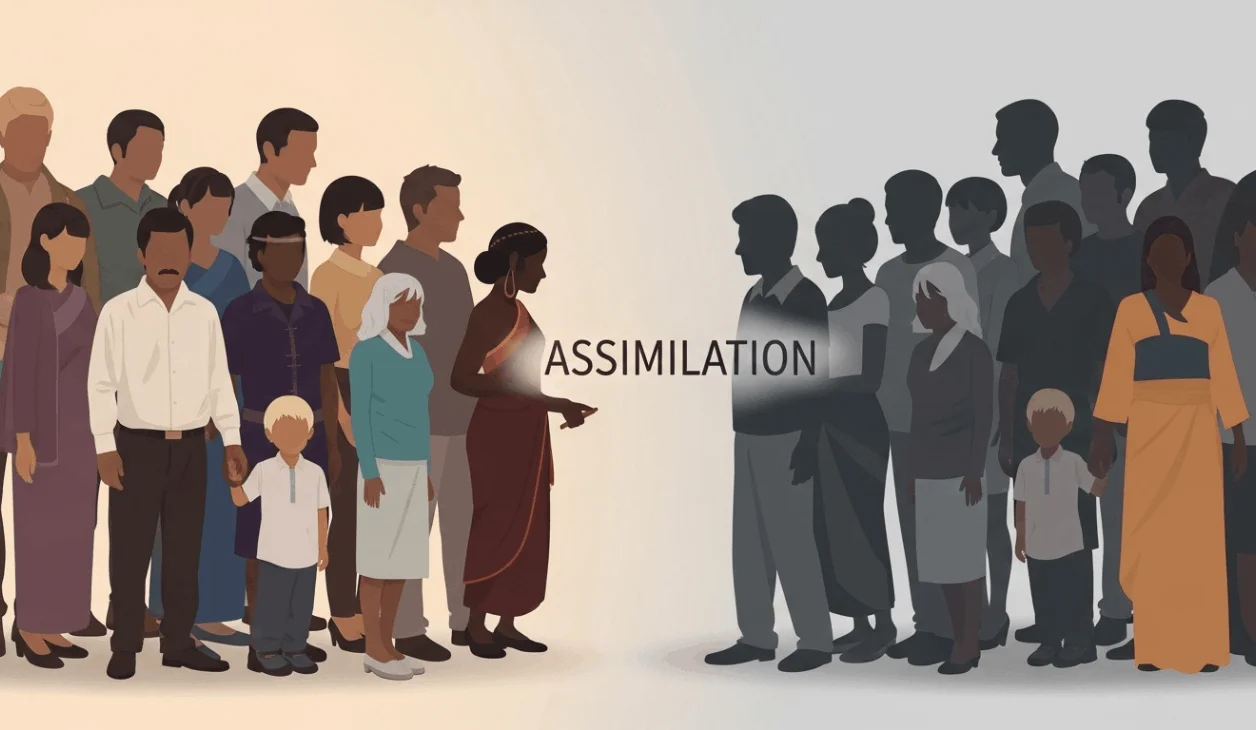
Assimilation Strategies: Balancing Cultural Identity and Social Integration
In today’s increasingly globalized world, the concept of assimilation has become more relevant than ever. But what does assimilation really mean, and how does it affect society, culture, and individuals? In this article, we will explore the concept in depth, its types, benefits, challenges, and practical implications.
What is Assimilation?
Assimilation refers to the process by which individuals or groups adapt to a different culture or society, often by adopting its language, values, customs, and norms. This process can be both voluntary and involuntary and usually happens gradually over time. For instance, immigrants moving to a new country may undergo assimilation by learning the language, adopting local traditions, and integrating into the workforce.
The term is not limited to social contexts—it is also used in biology and psychology. In biology, assimilation describes how organisms convert nutrients into energy and tissue, while in psychology, it refers to how people integrate new information into existing cognitive structures. Regardless of context, the core idea of assimilation is always about integration and adaptation.
Types of Assimilation
There are several types of Integration, especially in social and cultural studies:
-
Cultural Assimilation: This occurs when a minority group adapts to the dominant culture, often by adopting its language, customs, and lifestyle. An example is immigrants gradually celebrating local holidays and participating in community activities.
-
Linguistic Assimilation: In this type, individuals learn and use the dominant language for daily communication. It is often essential for integration into education and employment.
-
Social Assimilation: This happens when individuals build relationships and networks in their new community, gradually becoming part of social structures and norms.
-
Biological Assimilation: In biology, this refers to how the body absorbs nutrients and converts them into energy and tissues, showing that Integration can have both physical and symbolic significance.
Benefits of Assimilation
Integration offers multiple advantages for both individuals and society:
-
Increased social integration: When individuals assimilate, they build connections that strengthen community bonds and social stability.
-
Cultural understanding: Integration can foster mutual respect and understanding between different groups.
-
Better opportunities: Linguistic and social assimilation often opens doors to education, employment, and social resources that might otherwise be limited.
-
Personal growth: Adapting to new environments can enhance learning, flexibility, and personal development.
Challenges of Assimilation
Despite the benefits, Integration is not always smooth. Many face challenges such as:
-
Loss of cultural identity: Over- Integration may lead individuals to feel detached from their original traditions and identity.
-
Discrimination and social pressure: Minority groups may feel pressured to conform to the majority culture, causing stress or exclusion.
-
Unequal integration: Not everyone has the same access to assimilative opportunities, especially when language or financial barriers exist.
-
Generational conflicts: Younger generations often assimilate faster than older ones, potentially creating tension within families.
Assimilation in Historical Perspective
Historically, Integration has been a key strategy for nations and societies. Governments have used political, educational, and social measures to promote assimilation, particularly during immigration waves. A classic example is how some countries encouraged indigenous or minority groups to adopt the language and customs of the majority culture.
At the same time, resistance toIntegration has also been significant. Cultural preservation and identity have often led to social and political movements advocating for minority rights and recognition.
Practical Strategies for Healthy Assimilation
For Integration to be positive and sustainable, a balance between integration and cultural identity is essential. Some strategies include:
-
Cultural sensitivity: Communities should promote inclusion without forcing individuals to abandon their original culture.
-
Language support: Access to language courses and communication tools makes Integration easier and more effective.
-
Shared activities: Community events that involve diverse groups encourage social integration and mutual understanding.
-
Education and awareness: Teaching about cultural diversity and history helps reduce prejudice and fosters respect.
Conclusion
Assimilation is a complex but inevitable part of modern society. It can enrich both individuals and communities by promoting integration, understanding, and personal growth. At the same time, it requires careful attention to preserve cultural identity and ensure the process is inclusive and fair. By balancing adaptation and respect for diversity, assimilation can become a source of strength and collaboration in an increasingly interconnected world.
Understanding and navigating Integration is therefore crucial not only for individuals but also for societies as a whole, influencing how we live together, learn from each other, and build the future.