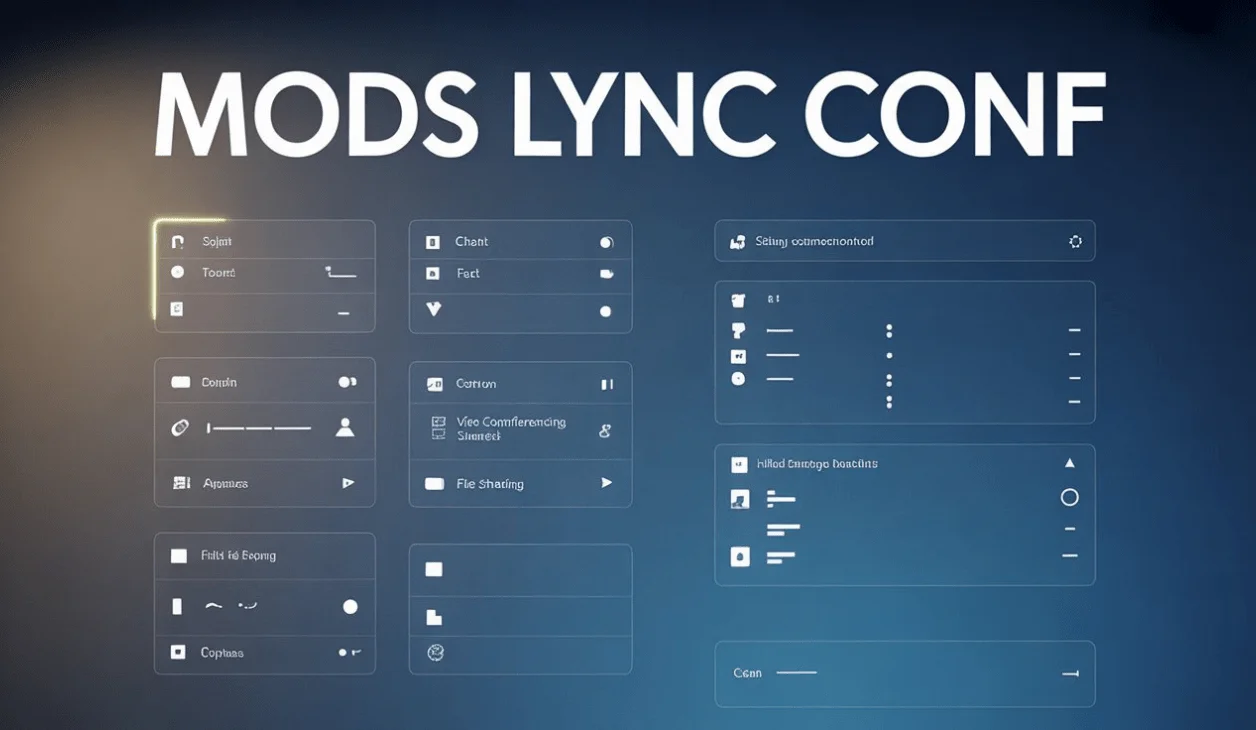
Mods lync conf: Complete Guide to Streamlined Communication and Collaboration
In today’s rapidly evolving digital landscape, mastering mods lync conf can unlock powerful communication and collaboration capabilities for both individuals and organizations. Whether you’re an IT administrator seeking streamlined configuration, or a team member curious about enhanced team workflows, understanding mods lync conf is essential. In this article, we’ll explore what mods lync conf entails, why it matters, and how to implement it effectively — with clarity, practical examples, and helpful transitions to guide you smoothly from one point to the next.
What Is Mods lync conf ?
At its core, mods lync conf refers to a modular configuration system designed to optimize communication tools, especially for platforms that support unified messaging, conferencing, and real-time collaboration. The “mods” denote a set of configurable modules, while “lync” hints at linking disparate system components — and “conf” stands for configuration. In essence, mods lync conf enables you to customize, connect, and control various functionalities such as chat, voice, video conferencing, presence detection, and file sharing. By bundling these features into a coherent configuration framework, teams can benefit from a more unified, efficient, and scalable communications environment.
Importantly, mods lync conf is not a one-size-fits-all solution. Instead, it offers flexibility: you can enable or disable specific modules based on your needs, integrate external services, and fine-tune settings to match your organization’s workflow. As a result, you’re not only improving efficiency, but also ensuring that every feature you activate serves a meaningful purpose.
Why Mods lync conf Matters
First of all, implementing mods lync conf helps reduce communication silos. In many organizations, chat, video conferencing, file sharing, presence updates — these functions often live in separate apps or systems. Consequently, users may find themselves jumping between tools, losing context, or duplicating tasks. However, with mods lync conf, all essential tools are integrated under a unified configuration. As a result, your team can shift seamlessly from instant messaging to video conferences, to document collaboration all without unnecessary friction.
Moreover, mods lync conf promotes consistency. By defining configuration policies centrally, administrators can ensure that every user’s experience is standardized, secure, and optimized. For example, you can set default audio/video quality, enforce encryption rules, or limit access to certain modules. Consequently, this results in improved security, reduced misconfigurations, and better overall user experience. Additionally, as your organization grows, scaling communication tools becomes far easier because mods lync conf allows module-level additions without disrupting existing workflows.
Finally, mods lync conf fosters collaboration. When team members share the same configuration framework, there’s less confusion and more synergy. Real‑time presence updates, integrated file sharing, and unified chat history — all these features enable smoother collaboration. Therefore, teams can respond faster, coordinate better, and ultimately deliver stronger outcomes.
Key Components of a Well-Designed Mods lync conf Setup
To leverage the full potential of mods lync conf, it’s helpful to understand its typical components. A standard configuration setup might include:
- Messaging Module: Enabling instant chat, group chats, and threaded discussions. This ensures quick communication and clear history tracking.
- Presence & Status Module: Allowing users to indicate availability — online, busy, away, do‑not‑disturb, etc. This visual cue improves responsiveness and coordination.
- Audio/Video Conferencing Module: Supporting one-on-one calls and group conferences with audio and video capabilities. This is often the centerpiece of collaboration, especially in remote work settings.
- Screen Sharing & Collaboration Module: Enabling users to share screens or collaborative whiteboards, which is crucial for meetings, brainstorming sessions, or training.
- File Sharing & Document Module: Allowing secure file transfers, shared document editing, and version control — indispensable for team collaboration on files and projects.
- Security & Permissions Module: Ensuring encryption, access controls, user authentication, and compliance settings. Without this module, any configuration would be vulnerable to breaches or misuses.
By carefully selecting and configuring these modules within mods lync conf, you tailor the communication ecosystem to your organization’s unique needs — while avoiding unnecessary bloat or complexity.
Steps to Implement Mods lync conf Effectively
If you’re ready to deploy mods lync conf, here’s a streamlined process to guide you:
- Assess Your Needs
Begin with a clear audit of your team’s communication habits. Do you rely heavily on chat? Frequent video calls? Sharing large documents? By identifying primary needs, you can choose which modules to enable first. - Design Your Configuration Blueprint
Create a configuration plan that defines which modules you’ll include, who gets access to them, and how they’ll integrate. For example, you might want the messaging module for everyone, but restrict conferencing to managerial teams. - Test in a Controlled Environment
Before rolling out company-wide, test your configuration on a smaller scale. This allows you to detect conflicts, ensure security policies are effective, and identify user‑experience issues. - Train Users and Provide Documentation
No configuration is useful if users don’t know how to use it. Provide clear guides, tutorials, or short videos to help users understand their new tools. Because of consistent configuration via mods lync conf, training is easier and more uniform. - Monitor and Iterate
After deployment, gather feedback — what works, what doesn’t, where latency or misconfigurations occur. Use that feedback to refine your modules, tweak settings, or enable additional features.
By following these steps, you ensure a smooth, efficient adoption of Lync configuration modules, maximizing benefits while minimizing disruptions.
Common Challenges and How to Overcome Them
Despite its benefits, implementing Lync configuration modules comes with potential pitfalls. For example, enabling too many modules at once may overwhelm users or degrade system performance. Similarly, insufficient training can leave users confused, defeating the purpose of integration. Another challenge lies in ensuring compatibility — some third‑party tools may conflict with your configuration, and security misconfigurations may expose vulnerabilities.
Nonetheless, with a gradual rollout, close monitoring, and clear documentation, these challenges are generally manageable. Start small — perhaps with messaging and presence modules — then gradually enable conferencing, screen sharing, and document collaboration. Additionally, enforce security measures early on, such as role-based permissions, encryption, and audit logs. Finally, communicate clearly with your team: explain what features are available, why they were chosen, and how to use them properly. By addressing challenges proactively, you’ll reap the benefits of a robust Lync configuration modules implementation.
Real-World Benefits: Why Organizations Love Mods lync conf
Many organizations — from small startups to large enterprises — have discovered that Lync configuration modules transforms the way teams communicate and collaborate. For instance, companies with distributed teams find it especially valuable because it consolidates tools: instead of juggling multiple apps for chat, video, and document sharing, everything conveniently lives under a unified configuration. As a result, onboarding new employees becomes easier, since the same configuration applies across the board.
Furthermore, organizations working under strict compliance or security requirements appreciate the centralized permissions and encryption controls Lync configuration modules enables. By managing modules centrally, IT teams can enforce consistent security policies and monitor usage. Finally, there’s a tangible productivity gain: less app switching, fewer miscommunications, and faster collaborative workflows — ultimately boosting output and team satisfaction.
Conclusion: Is Mods lync conf Right for You?
In conclusion, if your organization values seamless communication, streamlined collaboration, centralized security, and scalable growth then Lync configuration modules could be a game‑changer. While implementation requires thoughtful planning, testing, and training, the long-term benefits often outweigh the initial investment.
By thoughtfully selecting modules, designing a solid configuration blueprint, and rolling out in stages, you can build a communications ecosystem that serves your team’s unique needs. As a result, whether you’re aiming for improved remote team coordination, better document collaboration, or stronger security, Lync configuration modules provides a flexible and powerful framework.
Therefore, if you haven’t yet explored Lync configuration modules, consider giving it a try — because a well‑designed configuration can not only improve how you communicate today, but also set the foundation for future growth.